


Before buying, you may wonder which is better, ghee or coconut oil. Ghee is a safer choice even if you are following a keto or Paleo diet because ghee offers better food safety, higher food values, and excellent pairing ability with almost all recipes.
Which is better, ghee or coconut oil: the best ghee benefits
- Ghee contains up to 64% saturated fats, whereas coconut oil has over 90% saturated fats. This higher level of saturated fat in coconut oil can be concerning, regardless of moderation in consumption. For example, if ghee contains 50% saturated fats, coconut oil exceeds that significantly.
- Ghee has a nutty aroma, while coconut flavor may not suit all recipes. Coconut oil is less versatile than ghee.
- Ghee offers a high smoke point of 485 degrees Fahrenheit. If we compare the coconut oil smoke point, it is 350 degrees Fahrenheit, which means ghee is a better choice for high-temperature cooking.
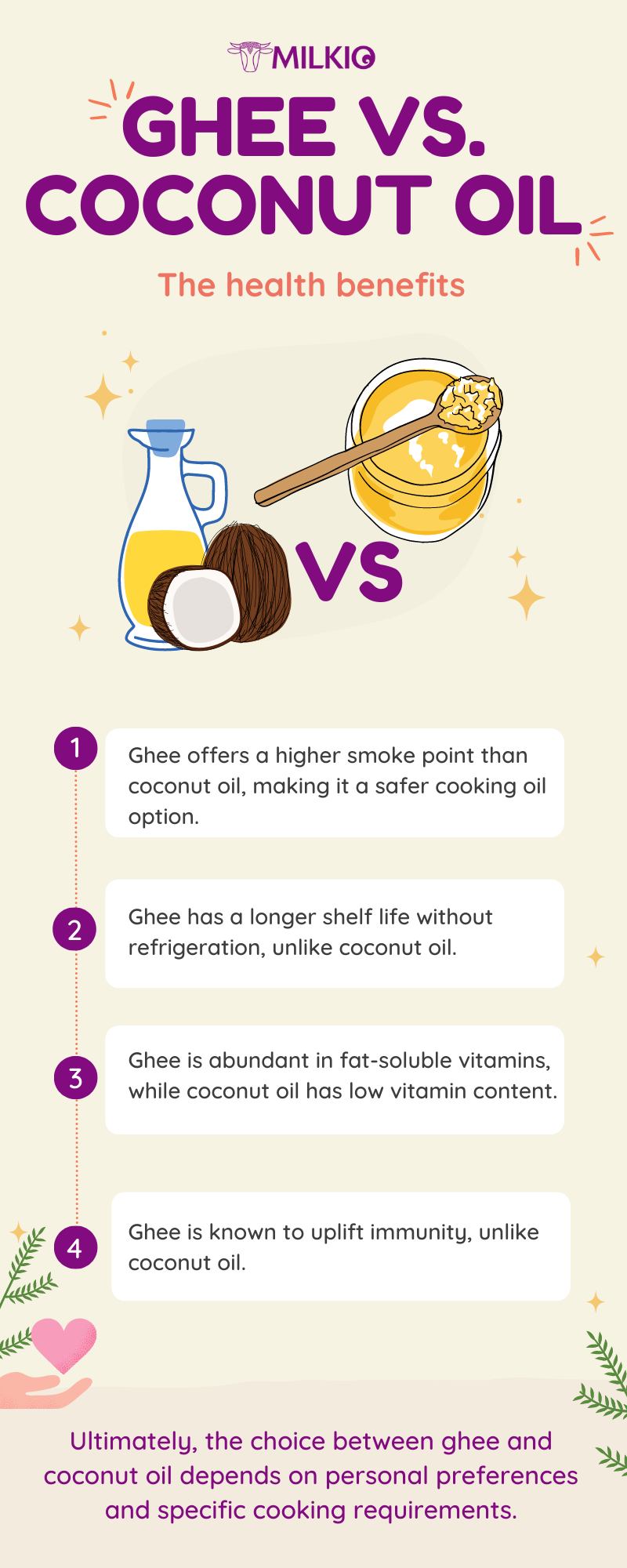
- Ghee is enriched in multivitamins; however, coconut oil is not rich in vitamin content. Coconut oil is not a reliable source of CLA, which helps in weight loss and is responsible for an immunity boost.
- Ghee contains small-chain fatty acids, which are not available in coconut oil, and it is one of the reasons behind ghee’s health benefits.
- Ghee is more storage-friendly than coconut oil.
If we ponder over the topic of which is better ghee or coconut oil, ghee offers better benefits. However, only grass-fed ghee can offer you the best benefits in your favor.